

Product Details
Item Description
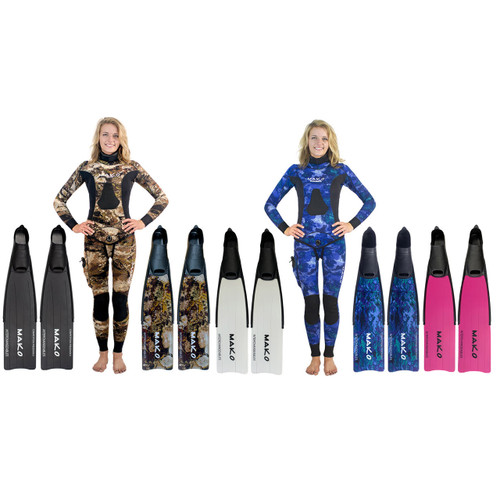
MAKO “Extra Long” Pure Carbon (Interchangeable) Freedive Fins (Blades Only)
Designed for high-level freedivers, the MAKO “Extra Long” Pure Carbon Freedive fin blades are built for divers who want greater efficiency, reduced fatigue, and a more relaxed kick cycle.
- Extra-long 85 cm blades for a smoother, more relaxed kick cycle
- Ultra-light T7000 carbon fiber construction
- Designed for deeper dives and all-day shallow diving with less energy expenditure
- Interchangeable blade system with no messy gluing required
Designed for High-Level Freedivers
The MAKO “Extra Long” Pure Carbon Freedive fins are designed and built specifically for high-level freedivers. Slightly longer than the industry standard 80 cm freedive fin blades, these MAKO “Extra Longs” measure 85 cm, providing a more relaxed kick cycle for deep diving as well as all-day shallow diving — all with reduced energy expenditure.
NOTE: These blades do not include foot pockets, but they fit just about every foot pocket on the market.
Why We Recommend MAKO Foot Pockets
MAKO Foot Pockets Are Completely Interchangeable
Our innovative no-glue foot pocket system makes it easy to switch blades whenever needed. You can choose between MAKO Standard Long Arm foot pockets or MAKO Short Arm foot pockets.
Innovative No-Glue Foot Pockets
Say goodbye to messy glue. Our Competition Freediver Foot Pockets require no glue for blade installation, making it easy to remove, change, and re-install your fin blades whenever needed.
Versatile and Convenient
Because our blades are not glued in, you can own multiple foot pockets in different sizes and effortlessly move your fin blades from one pair of foot pockets to another. This flexibility is unmatched compared to brands that require glued-in blades.
Product Specifications
- Made of T7000 Carbon Fiber
- Ultra light, yet incredibly strong for longer, deeper, and safer dives
- 85 cm extra-long blades for a more relaxed kick cycle during deep dives and all-day shallow diving
- Water-channeling fin rails for increased speed and control while reducing fatigue
- Available in Soft and Medium stiffness
- Includes a 1-year warranty
Soft: Recommended for small to medium-sized divers.
Medium: Ideal for larger divers with strong legs.
NOTE: Similar high-end fins sold at dive shops range from $415 to $460.00. However, because MAKO sells direct to divers with no dive shop markup, our prices are considerably lower.
Need Help?
If you have questions about size, blade length, or stiffness selection, don’t hesitate to call us. We’re here to help you make the best choice.
Customer Service Excellence
Our fin blades are sold by the pair, and if you ever lose one fin, MAKO offers the option to purchase a single replacement fin. Our commitment to unmatched customer service sets us apart as one of the only companies offering this service.
Choosing the Right Fin Stiffness
Selecting the proper fin stiffness involves considering several variables such as your weight, strength, diving style, and the conditions in which you dive. The general guideline is to choose based on your weight and strength:
- Soft blades: Recommended for small to medium-sized divers. These are our most popular option.
- Medium blades: Ideal for larger divers with strong legs.
Short Rail vs. Long (Standard) Rail Foot Pockets
SHORT TENDON FOOT POCKETS
Short tendon foot pockets are ideal for freedivers and spearfishermen who prioritize agility, maneuverability, and efficiency.
The reduced tendon length results in a lighter foot pocket and enhances the performance of whatever blade is selected. Note that this pocket is compatible with all our blades except polymer fin blades.
Both the short and long tendon pockets do not require gluing. This makes it practical for a diver to easily interchange between different MAKO pockets and blades. Some other manufacturers require gluing, especially for short tendon pockets.
STANDARD LONG TENDON FOOT POCKETS
Standard long tendon foot pockets are best suited for divers who need more stability, support, and power.
The longer tendon helps protect the blade from damage and abuse should contact be made with rocks or barnacles in the surf or in very rough water. The longer tendons may also be advantageous when fighting a large fish, since they provide additional rigidity and help limit excess blade flex under extreme conditions.
Scuba divers who spend most of their time close to the bottom may also prefer standard pockets.
Whether you're changing your plastic blades for fiberglass, or swapping out your black fiberglass blades for camo, it’s a straightforward process when you know the technique.